

This blog series is written by Kate Percival, MAT lead at PLN
Managing Effective Primary Languages for Multi-Academy Trusts (MATs): A series of blog posts outlining a five-point strategy for trust-wide success.
Confident moderation is about making secure judgements with ease. In fact, as this is it in a nutshell, this is what we, at PLN, called our moderation training session and it is proving to be both popular and essential CPD for subject leads.
Once everyone in a school or trust of schools understands what progress looks like at KS2, pupil progress becomes easier to track, assess and moderate. If you haven’t read blog 2 in this series, I would recommend heading there first as great moderation tends to follow secure understanding of tracking and assessment. Across a trust of schools, it is helpful if consistent terminology is used (e.g. Emerging, Meeting and Exceeding or Working Towards, ARE and Greater Depth) and even more streamlined if every school uses a similar tracking and assessment system so that when opportunities arise for MFL coordinators across a trust to come together, they are focusing on the same priorities and can therefore support each other through their shared experience.
Judgements without being judged.
The worst feeling as a subject lead when asked to attend a moderation session with other schools is the feeling of being judged. Judged on your children’s progress and attainment. Judged on how you deliver your curriculum. Judged on how your pupils’ books look. I remember it well from my days as a class teacher and MFL coordinator and wanted to get away from that when I designed this supportive session. Ironically, the session is all about judgements, but they are objective kind on pupil progress and attainment, not on you.
Exemplification of Core Skills
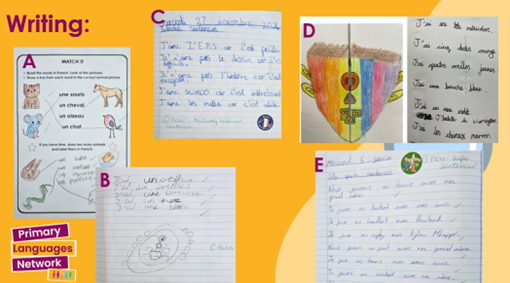
The session begins with a recap of national guidance from the DfE KS2 Programme of Study for languages as well as the latest Ofsted recommendations. We then unpick what progression in the four core skills or ‘modalities’ looks like across the four compulsory years of language learning at KS2. We offer a handy summary of the four stages, an aide-memoire that subject leads can pass on to their colleagues back in school when they are teaching and assessing progress. Helpfully, we look at video examples of speaking at each stage and have a go at applying our knowledge of the expected standard at each stage to grade each video. A low-stakes assessment for learning opportunity for attendees, if you will, to ensure confidence is starting to build. We do the same with writing, based on what we understand of the content and skill level of each stage of learning.
Then, a selection of work is shared, all from the same pupil, and based on what we have learned, attendees make their judgements based on the expected standard. We repeat the process with three pupils’ work across each stage to see the range and breadth.
How does your MAT measure up?
We've built a free audit tool so you can assess language provision across your trust in under 20 minutes — with built-in RAG scoring, a trust-wide dashboard, and benchmarks built in.
Teacher agency
The caveat to this process is that they are children I have taught and therefore I know. I am able to justify my reasoning for each judgement based on whether their written work is typical of that particular child. I know how they respond in lessons, how accurate they are, if they tend to have misconceptions or struggle with retention week on week. I know the amount of support they used for a task, if a child has actually been absent for a few of the sessions or going through a challenging time. So, basing a judgement in primary languages just on written work is only part of the story. You know your pupils best and your teacher agency counts for such a lot. In fact, you can base your judgements solely on teacher assessment; however, it is good practice to be able to evidence your justification and we talk through several informal ways to do this.
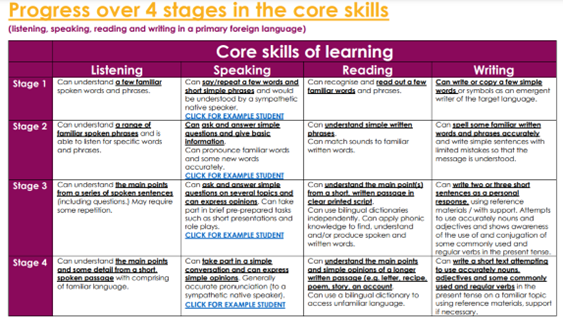
That’s both productive skills covered, on to the two receptive skills: listening and speaking. That’s possibly where a summative assessment opportunity comes into its own.
Summative assessment
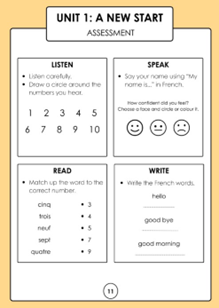
Again, not to be relied on solely, but summative assessments can be extremely useful to gauge individual competencies especially for those children deemed ‘borderline’ in teacher assessment. PLN’s ‘Puzzle It Out’ assessments are designed to be used optionally at the end of a topic and within one lesson allowing flexibility over which skills teachers focus on to assess and which assessments to use throughout the year. Each assessment comes with a teacher guide, including audio files for the listening activities plus a pupil worksheet.
The big question with summative assessment is how much support or scaffolding is allowed. We discuss this idea and again, it comes down to teacher judgement. What works for one cohort may not be appropriate for another.
So you can see that moderating written outcomes in primary languages involves much more than a tick box exercise. This session aims to empower individual teachers and language coordinators and streamline trust-wide approaches to moderation so that everyone can share best practice and feel confident justifying outcomes.
At PLN we have a professional development journey for our MAT members (which include Astrea Academy Trust, Co-op Academies and Cambrian Learning Trust) to support aspects of teaching and learning, subject leadership, tracking and assessment, pupil progress and moderation allowing you to oversee trust-wide progress effectively.
Not yet a trust member? Head to our booking page to attend an introductory session on Driving Excellence in Primary Languages for MAT or cluster Leads for Languages and Curriculum Directors in charge of trust-wide MFL.